
October 16, 2026
Export Invoice Factoring: Turn U.S. Receivables Into Cash Flow Faster
International Banking
Fraud Alert: Scammers are texting and calling as TRB’s Fraud Department. TRB’s Fraud Department will never call you, text you a link, or ask for your username, password, or token code verbally or via text. If contacted, hang up and call us at 855-534-4433.


FDIC-Insured – Backed by the full faith and credit of the U.S. Government
Federal banking policy can shape how readily community banks provide credit to the businesses, families, and local economies they serve.
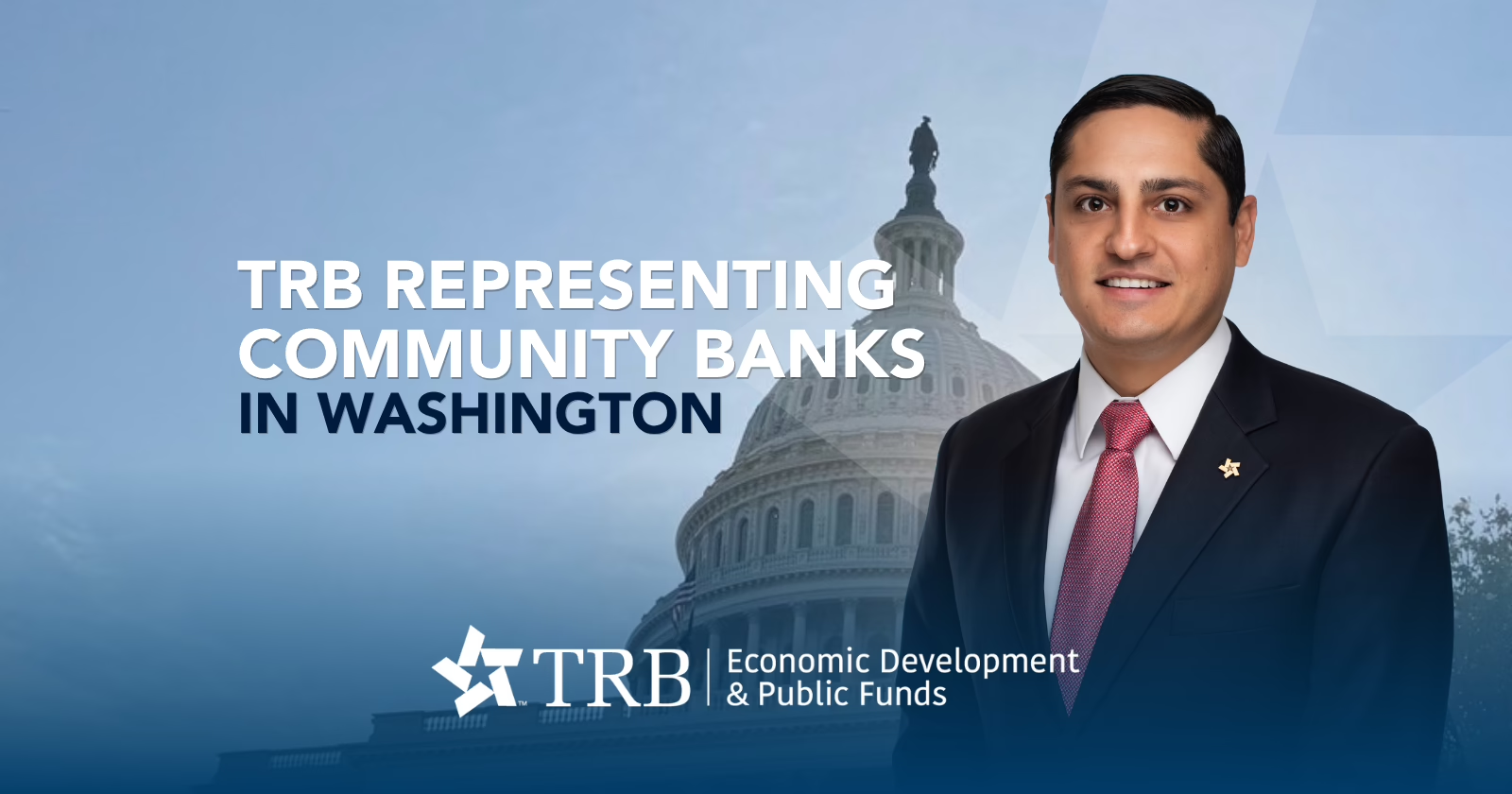
Emily Kirchner and I recently traveled to Washington, D.C., to meet directly with policymakers on two issues affecting community banking: the Main Street Capital Access Act and federal policy governing digital assets and stablecoins.
Both debates involve technical questions about regulation, supervision and market structure. Their practical consequences are much closer to home. They can influence the resources community banks devote to compliance, the deposits available to support lending and, ultimately, the financial capacity available within local markets..
For growing community banks, regulatory thresholds can materially change the cost and complexity of operating. The Main Street Capital Access Act addresses several of those thresholds and supervisory requirements. One provision would raise the asset threshold for qualifying for an 18-month examination cycle from $3 billion to $6 billion. Texas Regional Bank recently crossed the $3 billion mark, giving us firsthand perspective on that transition.
Crossing an asset threshold can introduce additional examination, reporting and compliance requirements even when a bank’s underlying business model and risk profile remain substantially the same. The question is whether supervision remains proportionate to the size, complexity and risk of the institution, and whether the resources required to meet those obligations remain available for serving customers and supporting growth.
On the heels of the GENIUS Act’s passage in 2025, the CLARITY Act has become a focal point in the debate over preventing payment stablecoins from functioning as substitutes for traditional bank deposits.
For community banks, the issue reaches directly into deposit funding. Deposits support the credit banks extend to businesses, homeowners, agricultural producers and other borrowers. Community banking organizations have urged Congress to strengthen the CLARITY Act’s stablecoin provisions, arguing that interest- and reward-like incentives could encourage deposits to move outside the traditional banking system and affect the availability of credit in local markets.
Emily and I made the trip independently rather than as part of an association fly-in. We met directly with policymakers on how these issues operate inside a growing community bank and how federal decisions can work their way into the markets we serve.
Community banks convert local deposits into local credit. That capital helps businesses expand, families finance homes and communities sustain economic activity. Regulatory policy influences how efficiently banks can deploy that capital, manage risk and maintain the relationships that make local decision-making possible.
Keeping that operating perspective represented in Washington helps ensure federal policy accounts for what happens after the rule is written: how capital moves, how credit is extended and how communities continue to grow.
Our team serves as an expert resource in real estate and public affairs local, state and federal leadership. Engaging those leaders in the cities, regions we are in to provide them good counsel to help them improve the lives of their citizens with economic development.
Learn More